

If you are sitting at your computer or staring at your phone searching for the answer to this question, you are probably feeling a bit of a knot in your stomach. You have decided to take a huge step toward building your family, but there is one giant fear standing in your way: the physical part.
You have heard the stories. You have seen the photos of hundreds of needles on Instagram. You are wondering if your body can handle it. Is the dream of having a baby worth the physical price you have to pay?
The short answer is this: the process involves discomfort, but it should never be “unbearable pain.” In 2026, we have better technology and better medication than ever before. But to give you an honest guide, we need to break down the process piece by piece.
If you want to know if IVF is painful, you need to look at the three main stages. Here is the truth about what you will actually feel.
Stage 1: Ovarian Stimulation (The Needles)
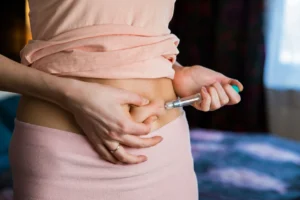
This is the part that scares most people. For about 10 to 12 days, you have to give yourself hormone injections. Most people think of a giant needle at the doctor’s office, but that is not what this is.
The needles used for IVF are very tiny. They are similar to the needles people with diabetes use for insulin. You usually inject them into the fatty tissue of your stomach. Most patients describe the feeling as a small pinch or a quick sting.
The real discomfort in this stage is not the needle itself. It is the hormones. As your ovaries work hard to produce multiple eggs, you will feel very bloated. Imagine the feeling after a very large Thanksgiving dinner, but it lasts for a week. Your ovaries are physically expanding, so you might feel some heaviness or pressure in your lower abdomen. This is part of the IVF process, a painful experience that people talk about, but it is a sign that the medicine is working.
Stage 2: Egg Retrieval (The Procedure)
When people ask if IVF treatment is painful, they are usually thinking about the egg retrieval. This is a minor surgical procedure where the doctor uses a thin needle to collect the eggs from your ovaries.
Here is the good news: you are not awake for this. In a high-quality clinic, you will be under “conscious sedation” or light general anesthesia. You will be in a deep sleep and you will not feel a single thing during the procedure itself.
The “pain” part happens when you wake up. Most women feel cramping that is very similar to a heavy period. You might also feel some soreness in your pelvic area for 24 to 48 hours. A heating pad and rest are usually all you need to manage it. If you have ever had a bad period, you have already handled worse pain than an egg retrieval recovery.
Stage 3: The Embryo Transfer (The Easy Part)
If you have made it through the retrieval, the transfer is a breeze. It is very similar to a routine pap smear. The doctor uses a small catheter to place the embryo into your uterus.
There are no needles and no anesthesia for this part. You might feel a little bit of pressure when the catheter is inserted, but most women say it is totally painless. You walk in, the embryo transfer happens in about 15 minutes, and you walk out. The only “pain” here is the emotional stress of the waiting game that follows.
Which is More Painful: IUI or IVF?
This is a very common question: Which is more painful, IUI or IVF? IUI (Intrauterine Insemination) is a much simpler process. It is just one quick procedure where sperm is placed in the uterus. There is no egg retrieval and usually fewer injections. Because of this, IUI is physically “easier” on the body.
However, IVF involves more steps. Because IVF requires a surgical procedure (the retrieval) and more intense hormone therapy, it is technically more “painful” or uncomfortable than IUI. But remember: IVF also has a much higher success rate for many couples. People choose the extra discomfort of IVF because it is the most effective path to a baby.
How to Manage Discomfort During IVF
If you are worried about the IVF process’ painful moments, there are ways to make it much easier. You do not have to just “tough it out.”
- Use Ice: Before you do your injections, numb the area with an ice pack for a minute. It makes a huge difference.
- Stay Hydrated: Drinking plenty of water and electrolytes helps reduce the bloating and heaviness in your ovaries.
- Rest After Retrieval: Do not try to go back to work the same day as your egg retrieval. Give your body 24 hours to recover.
- Communication: If you are feeling sharp pain rather than dull cramping, tell your doctor immediately.
The Emotional vs. Physical Pain
We need to be honest here. For many women, the “pain” of IVF is not physical. It is the emotional weight. The constant appointments, the waiting for phone calls from the lab, and the fear of a negative result are much harder to handle than a small needle.
The physical discomfort lasts for a few weeks. The emotional journey can feel much longer. This is why having a support system is just as important as having a good doctor.
Summary: Is IVF Treatment Painful?
So, is IVF treatment painful? It is a series of small, manageable discomforts rather than one big, agonizing event. The “pain” is cumulative. It is the fatigue, the bloating, and the repeated pinches. But for the vast majority of women, it is entirely manageable. Most patients finish their cycle and say: “That wasn’t nearly as bad as I thought it would be.”
You are stronger than you think. Your body is capable of incredible things. A few weeks of bloating and some tiny needles are a small price for a lifetime with your child.
Why Choose Advamed for Your Journey?
At Advamed Hospital, we understand that the fear of pain is real. We don’t just focus on the science: we focus on the person. We believe that a successful IVF journey should be as comfortable and stress-free as possible.
Our team of specialists at Advamed uses the latest 2026 protocols to minimize your discomfort. From using the most advanced, ultra-fine needles to providing expert sedation during your retrieval, we make sure your physical well-being is a top priority.
We don’t believe in a “one-size-fits-all” approach. Every woman’s body reacts differently to hormones, and we adjust your medication daily to prevent excessive bloating and discomfort. At Advamed, you aren’t just another patient on a conveyor belt. You are a partner in this process.
If you are ready to take the next step but still have questions about the physical side of the treatment, we are here to talk.
FAQs
The needle pinch lasts just a few seconds, and most women feel fine again within minutes.
Yes, most women work normally during IVF, though you may want to rest the day after egg retrieval.
No, it feels similar to a Pap smear, just mild pressure, and it is over in about 15 minutes.
Yes, Advamed uses ultra-fine, modern needles and teaches you simple numbing tips to make injections nearly pain-free.
Advamed provides gentle sedation so you feel nothing during the procedure, and our team gives you personalized aftercare to keep cramping mild and brief.