

The decision to expand family is one of the greatest milestones that a couple may have. Although the process leading to parenthood is usually considered through a prism of thrill and expectations, the physical and logistical planning has a significant role to play. Contemporary reproductive medicine underlines the fact that a healthy pregnancy does not commence at the point when conception takes place; it starts months before.
Through proper pregnancy planning as an individual or as a couple, you are able to maximize your own health, minimize possible risks and provide the most ideal conditions for your future child. This manual explains the medical, nutritional, and lifestyle changes needed to give you a high likelihood of having a successful and healthy pregnancy.
The Importance of Preconception Health
When we refer to pre-conception health, we are simply referring to being in optimum shape before that pregnancy test comes out positive.
The majority of people only start consuming better or taking vitamins. The thing is, though, that the most essential organs of a baby begin to develop during the first weeks, and even before you find out that you are having a child. By focusing on pregnancy planning for couples early, you are basically pre-loading your body with the strength it needs. This isn’t just about the person carrying the baby either; the father’s health matters just as much for the quality of the sperm.
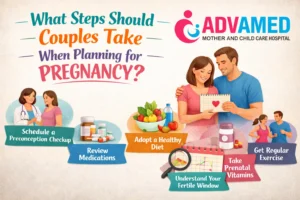
Scheduling a Preconception Checkup
Start by seeing a doctor for a thorough check of your reproductive health. This is not a routine physical but a focused consultation.
Medical History Review
Your doctor will check your family history and your own health background. If you have had any period problems or other health concerns, now is the best time to discuss them.
Vaccinations and Screenings
Certain diseases, such as Rubella (German measles), may be harmful to the mother during pregnancy. Your doctor will check if your vaccinations are up to date. They will also test for infections like STIs that could cause problems if not treated.
Managing Chronic Conditions
If you have diabetes, high blood pressure, or thyroid issues, you need a plan. These conditions can change during pregnancy. Your doctor may also switch your current medicines to ones that are safe for the baby.
Nutrition and Supplementation for Both Partners
What you put in your mouth today becomes the building blocks for a baby tomorrow.
Folic Acid and Prenatal Vitamins
Folic acid is a B-vitamin that helps prevent serious birth defects of the brain and spine. You should aim for about 400 mcg to 800 mcg every day, starting at least a month before you start trying.
Foods to Embrace and Avoid
It is time to focus on your food. Eat more nuts, leafy greens, whole grains, and lean proteins. At the same time, try to cut back on processed snacks and fish high in mercury, like swordfish.
Male Fertility Nutrition
Men, it is equally important that you eat well. Vitamin C, Vitamin E and Zinc are antioxidants that are considered superfoods for sperm. Consumption of tomatoes (lycopene) and walnuts may actually be beneficial in regard to sperm health count and movement.
Lifestyle Changes That Support Fertility
Your daily habits can have a huge impact on how to increase chances of pregnancy.
Reducing Alcohol and Caffeine
There is no necessity to stop drinking coffee permanently, and perhaps, you should reduce it to one cup a day. An excessive amount of caffeine has been associated with difficulty conceiving. Regarding alcohol, the best bet for women is to quit when the attempt is made. In men, alcohol may interfere with testosterone levels, hence keeping them at moderate levels.
Quitting Smoking and Avoiding Substances
This one is non-negotiable. Smoking damages eggs and sperm DNA. It also makes it much harder to get pregnant in the first place. If you’re looking for a reason to quit, this is the best one you’ll ever have.
Exercise and Healthy Weight
You do not have to be a professional athlete, but a healthy weight is a factor of difference. Excessive weight loss or gain can cause a hormonal imbalance and prevent ovulation. It is ideal to have moderate exercise such as walking or swimming.
Tracking Ovulation and Understanding Fertility Windows
Timing is everything. You are only actually fertile for a few days each month. This is called your fertility window.
Most women ovulate about 14 days before their period starts. To find your peak time, you can:
- Use Ovulation Kits: These are like pregnancy tests but they tell you when you are about to ovulate.
- Check Temperature: Your body temperature rises slightly right after you ovulate.
- Watch for Changes: Your cervical mucus becomes stretchy and clear like egg whites when you are most fertile.
When to Consider Fertility Testing
If you have been trying to conceive for a while without success, there is no need to panic. It does not mean it will never happen. It just means you may need some extra help. Modern tests can check for issues like blockages or hormone imbalances, and most of these problems can be fixed.
Financial Planning for Growing Your Family
Bringing a baby into the world is a beautiful but costly journey, and the expenses start before they even arrive. Check your health insurance to see what it covers for prenatal visits and delivery. It is also a good idea to start a small savings fund for the time you will take off work. A financial cushion reduces stress, and less stress is always better for fertility.
Emotional Readiness and Strengthening Your Relationship
Parenthood is a team sport. Pre-emptively have the difficult discussions. Who will get up at 3:00 AM? What will you do about childcare? What is your opinion regarding parenting types? This is the time to build your relationships to make sure the restless nights are filled with a front that you are together.
Bottom Line
Preparing for a baby is about more than just trying. It means building healthy habits, visiting your doctor, and getting your body ready. These steps give your future child the best possible start.
At Advamed Hospital, we believe every parenthood journey deserves professional and personal care. Our team offers everything from preconception counseling to advanced fertility treatments. We do not just treat patients; we help families. Whether you are just starting to think about a baby or have been on this journey for a while, we are here to help you take the next step with confidence.
FAQs
It is recommended to start taking a daily supplement of 400 to 800 mcg of folic acid at least one month before you begin trying to conceive.
A preconception checkup reviews your medical history, manages chronic conditions, and ensures vaccinations are up to date, which is crucial because major organs develop before you may even know you are pregnant.
You can track ovulation using over-the-counter ovulation kits, monitoring a slight rise in basal body temperature, or noticing changes in cervical mucus, which becomes clear and stretchy during peak fertility.
Advamed Hospital provides comprehensive support ranging from initial preconception counseling and nutritional advice to advanced fertility treatments, all delivered with professional and personal care.
Advamed Hospital focuses on helping families rather than just treating patients, offering a supportive environment to help couples take the next step toward parenthood with confidence.